Q-commerce stands for Quick Commerce and refers to fast delivery. Fast means a delivery time of one hour or less. Accordingly, the starting point of the trend is food delivery. Since the Covid pandemic, however, quick commerce has expanded to other categories, such as Foods, drugstores, and medicine, which is also known as Fast Moving Consumer Goods.
Shortly in advance:
- Quick Commerce or Q-Commerce is a variant of ecommerce, with online retail being expanded to include fast deliveries of between 10 and 60 minutes.
- It is suitable for everyday products such as drugstore items or groceries
- Delivery is frequently outsourced
- The warehouses are decentralized, located in residential areas and have significantly less product variance than in e-commerce
What is Quick Commerce?
Q-Commerce or rapid delivery stands out particularly short delivery times off, aiming for a maximum of one hour. Decentralized warehouses help meet customer needs immediately. The camps are small and located in urban areas or in residential areas. They are also used as Dark Stores because they are not accessible to customer traffic. The articles are sorted in such a way that they can be quickly picked according to turnover frequency. In addition, the variance of products is significantly smaller than in e-commerce.
How is it implemented?
- The picking Is done in a very short time: Often only pass 2 minutes between ordering and picking. This often involves a warehouse management system used to optimize the picking process.
- Outsourcing delivery: In order to make the delivery process as efficient as possible, delivery is often outsourced to third parties who specialize in this in the sense of third-party logistics. Since this contract logistics is contractually regulated, there is planning security for the companies involved.
- Central control: The processes are controlled centrally, but are scalable depending on size. This provides a good overview and customers and clients benefit from the resulting transparency.
- individuality: Inventory can also be separated by customer and orders can be individually designed.
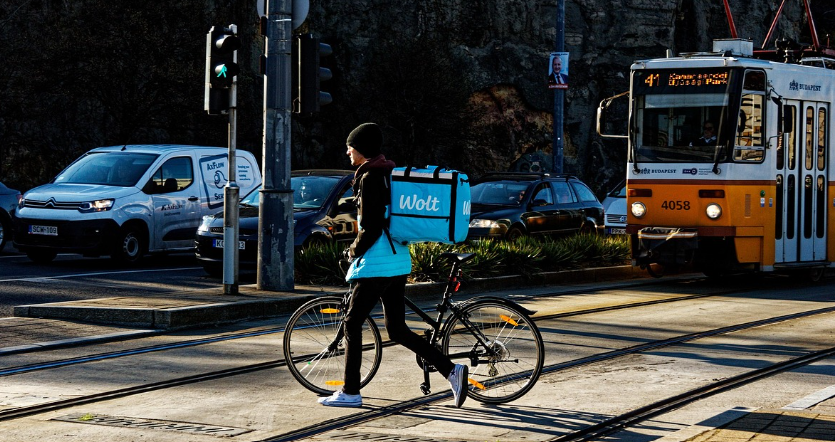
- Smaller transport vehicles: Instead of large transport vehicles, for example, people rely on bicycles that are less impact on traffic and the environment. You can also read more about this in storage space. Everyday products that you need at short notice are particularly suitable for Q-Commerce. These also meet the storage and transport requirements of being small, handy and easy to transport with bicycles. Logistics companies also rely on TOur optimization, as there is also with FrachtPilot.
What are the advantages and disadvantages of Q-Commerce?
Die short term availability has benefits for customers and online stores, since the former more comfort have and Flexible shopping Can. They work more often Spontaneous shoppingWhat is Increasing sales has an impact on the seller. In this way, they can better retain customers and reach in particular younger target groups better like you can read it on Shopify.
Because delivery, transportation, and personnel costs are high, products are often more expensive. Turnover-increasing spontaneous purchases reflect the Fast-paced , which is omnipresent in society. The socially difficult working conditions of suppliers are also frequently criticized, as they are comparatively poorly paid for a lot of stress and pressure. Also, very small orders lead to relatively high traffic volume.