Blog
Agri-PV - 5 benefits of solar energy in the field
Katharina Theo Rösner

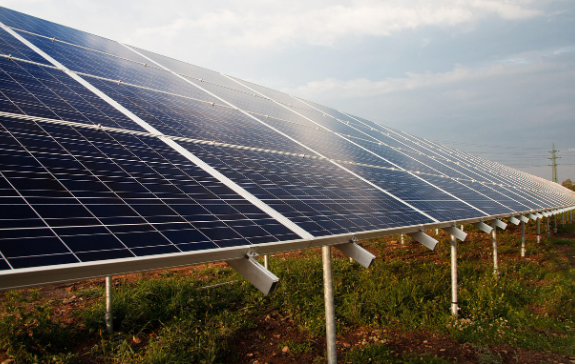

Solar energy makes an important contribution to becoming climate-neutral. The target is 400 gigawatts by 2040. Available land for agriculture and wind power or photovoltaics increasingly are in competition, but what can be prevented by Agri-PV. Because it combines plant crops, animal husbandry and solar energy. In this article, we will explain the advantages and what you need to consider when installing.
Agri-PV stands for Agri-photovoltaic and combines plant breeding or animal husbandry with the production of stream from solar energy. For this purpose, solar modules are installed on arable land which are at least 2.1 meters high elevated. The height and sufficient distances ensure that the agricultural use is still possible. For example, animals can graze underneath when the PV system is set up on grassland. If it is installed on arable land, shade-tolerant plant crops grow well underneath.
The concept has already been developed in 1981, in 2021 the Standard DIN SPEC 91434 was developed.
For example, the following are suitable:
Areas are increasingly competing with each other, as they are needed for climate neutrality by 2045. For many areas (about 4 million hectares according to Deutschlandfunk) However, there is potential to use them twice with Agri-PV. The goal is until 2040 400 gigawatts of solar and wind energy output to be installed.
According to the ISE (Fraunhofer Institute for Solar Energy Systems) Could from the 17 million hectares agricultural area (LF) 4 million ha can be optimally used for PV and 500 gigawatts of electricity can thus be obtained from renewable energy sources.
However, the land should primarily be reserved for agriculture, as is the case in court rulings.
Agri-PV solves this area conflict optimally by installing the modules with sufficient spacing and height. Nevertheless, it currently only accounts for a share of less than 1% in terms of overall performance.
The Baden-Württemberg model region, for example, shows how entire communities can be supplied with electricity in a climate-neutral way. In addition, Germany's electricity needs could be met with agricultural solar systems.
The solar modules offer many advantages for animals and plants such as protection from heat, frost, hail and wind and it provides shade. This is particularly important because the sun and heat also cause water to evaporate.
In addition, plants lose more water, too, due to heat stress. This is prevented by the PV systems, which ultimately will save water.
The result therefore is an increase in yield, particularly during drought. Since the plants are not as exposed to the weather, the soil is also protected from erosion.
The combination of blossom meadow or flower strip and PV system can contribute to biodiversity. And so they reduce the use of pesticides, plant protection products and weed killers.
A study from the USA also showed that the number of insects has tripled even without flower strips thanks to Agri-PVt, as Deutschlandfunk reported. After three years, the diversity of insects and plant species has increased exponentially.
One connection may be that the plant experiences less heat stress, perspirates less and is therefore more resistant to pests. This means that less pesticide has to be added, which has a positive effect on other plants and insects.
Photovoltaics should be used primarily at Iinfrastructure lines, low-yielding areas or conversion areas are built up because high-yield areas should agriculture continue to be maintained. Because although the sustainability goal is important, it must be brought into line with agriculture. 66% of agricultural income must be preserved and it is a building permit necessary.
It is true that the electricity can be fed in or used directly. But there is currently a lack of grid expansion, as electricity often simply cannot be fed in.
In addition, the ROI (Return on Investment) very low, as it can take 20 years to recoup the installation costs. The revenue amounts to 6.5 cents/kilowatt hour.
Yes, if you waived subsidies. However, the direct marketing is obliged according to §20 EEG 2021 for systems from a size of 100 kWh. Every kilowatt hour that you consume yourself does not have to be marketed directly.
The furtherance as part of EEG prohibits personal use because, in accordance with the law, PV systems make a contribution to the environment in particular because everyone benefits from the feed-in. After all, there is a fixed fee for that. The supply goes to the local network operator.
If you want to take advantage of other funding, such as through Progres.NRW, private use is also not allowed.
A system of 7 to 11 modules has an output of 3 to 5 kWp (kilowatt peak), which is why private households can use it for their own purposes.
The agricultural area that is lost as a result amounts to 10 to a maximum of 15 percent with open systems.
For the supply, a fixed remuneration of 6 to 9 cents per kilowatt hour over 20 years is disbursed and surcharges per kilowatt hour. However, these have been declining since 2021 and amount to around 0.5 ct/kWh.
In NRW, you get with pRogres.NRW Instead of a fixed fee, an investment subsidy of 25 percent for construction, transportation and advice in advance.
If agriculture is not affected, direct CAP payments will also (Common Agricultural Policy) continue to be paid out. Since 2025, only the area that is actually covered by the panels has been deducted.
However, for funding under the EEG you have to meet certain requirements:
Direct marketing of solar power from your own agri-PV system can be worthwhile, as the electricity can also be used for your own farm and direct marketing is remunerated with market bonuses.
It prevents competition with space, contributes to climate neutrality and saves resources.
In addition, you can not only market the electricity directly, but also fruit, berries or potatoes that you grow under it. If you are still looking for a suitable ERP-Software for your regional direct food marketing FrachtPilot might be just the thing for you!
Have a look at our site, book a free webinar to get to know us and the software, or try FachtPilot upfront gratuitous. We're looking forward to seeing you!