Blog
Cash in regional direct marketing - what is permitted?
Katharina Theo Rösner

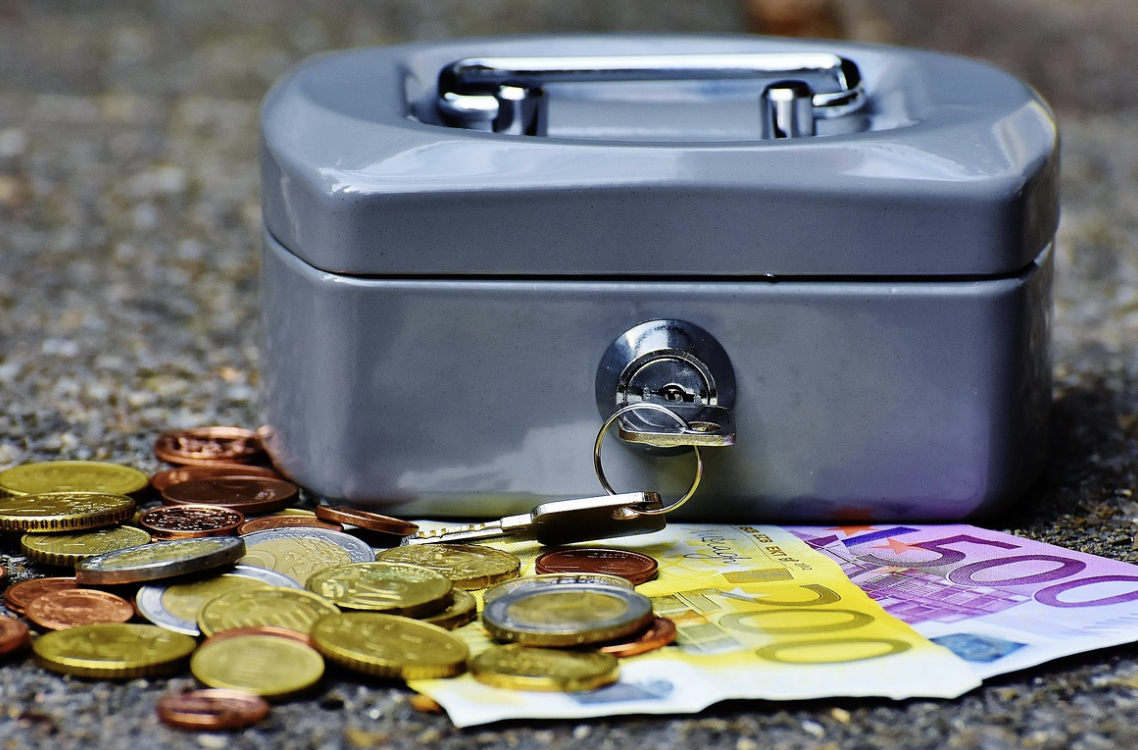

Cash payments are still permitted, and open cash registers are still allowed for certain businesses. We explain everything you need to know about receipts and payment vouchers.
Cash itself is not problematic if payments are recorded correctly. However, it can be more easily misused to conceal revenue than is the case with bank transfers and digital transactions. This is because if revenue thresholds are not met, no VAT needs to be paid.
With digital payments, information about the sender and recipient is stored automatically. For cash payments not recorded by an electronic or digital point-of-sale system, a separate payment voucher must be created. This serves as the correct documentation for tax audits and internal bookkeeping.
For open cash registers, cash books must be maintained manually. A critical issue with manually maintained cash books is their susceptibility to alteration. This can contribute to them being recorded incorrectly or potentially being embezzled. Therefore, they do not comply with proper accounting standards. Furthermore, the digital implementation of cash books in the form of Excel spreadsheets is not permitted because they can be altered. Or rather, they may not be stored exclusively in electronic or digital form.
According to the GoBD, the principles for the proper keeping and storage of books, records, and documents in electronic form as well as for data access, electronic cash registers must be equipped with a TSE module. For small-amount invoices of up to €250, a till receipt is sufficient as proof instead of a formal receipt. The obligation to issue receipts is limited to electronic cash registers or digital POS systems. In situations where a stationary cash register cannot be used, the lack of receipts is a problem. For market stalls are therefore offline-capable digital POS systems a sensible choice.
In principle, any business can opt for an open cash till if it meets operational requirements. However, companies exceeding certain revenue thresholds are required to use double-entry bookkeeping and are therefore also required to maintain a cash book. Implementing proper bookkeeping is made easier with an automated cash book. It is therefore also sensible to have a cash register that can print receipts. Furthermore, starting in 2027 the requirement for cash registers for annual revenue of €100,000 will likely apply. At that point, the €10,000 cash payment limit will also come into effect.
A receipt is not an invoice, and a till receipt is not a formal receipt. This is because a till receipt confirms the payment, but it is incomplete regarding the mandatory information that must appear on a receipt . While there is a mandatory receipt requirement for electronic cash registers, these receipts do not contain complete details about the customer or the items. More important for cash registers is the TSE module, which generates a number for every transaction that is printed on the receipt.
Receipts verify the actual flow of money. The mandatory information are:
Invoices on the other hand, are complete regarding items, quantities, amount, taxes, and the details of the sender and recipient. However, the amount is usually still outstanding. Unless they include a note stating that the money has already been paid or transferred.
They should be stored digitally or as a physical copy. To link the documents, the receipt can also be attached to the invoice.
The daily cash report lists all cash receipts and expenditures.
Companies that are required to prepare balance sheets and use double-entry bookkeeping must also maintain a cash book. This also applies to companies that operate as commercial businesses or are registered in the commercial register. It is voluntary for freelancers or small business owners , or for those with annual revenues under 600,000 euros and annual profits under 60,000 euros. These individuals may also choose to use a handwritten cash book. This is sufficient if it is maintained on a voluntary basis, or in the case of an open cash register. However, the origin of the amounts must be verifiable. This can be done using receipts, vouchers, or slips, for example, which must be created and stored chronologically, in an organized manner, and in their entirety. Furthermore, it must be possible at any time to reconcile the actual cash balance with the target balance—the key term here is the ability to perform a cash count. Conversely, this means that a cash book alone is not enough; receipts and vouchers are also required.
Digital transactions and transfers, on the other hand, are processed via the bank and the collection of direct debit mandates and the import of CAMT files documented transparently. This makes this payment method the safest and easiest for companies and banks—as well as for customers. The receipt in this case is the invoice document.
The rule is: a delivery note does not replace an invoice, and the invoice is not a receipt or proof of payment.
For direct marketing the following applies:
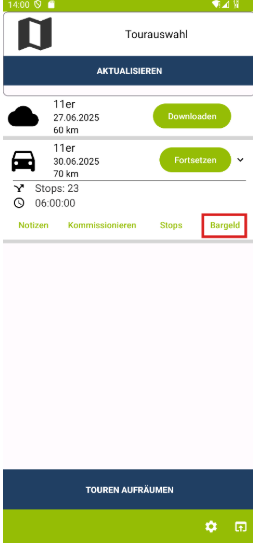
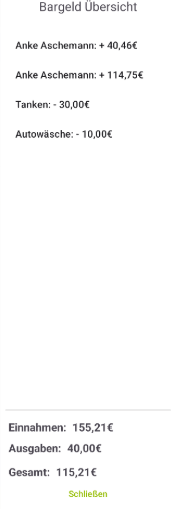
Cash payments are generally permitted but must be supported by cash receipts or vouchers if the amount exceeds €250. The obligation to issue receipts applies to electronic cash register systems. Open cash registers are permitted up to certain revenue thresholds, but they complicate the proper recording and documentation of payments. Documentation requirements are made easier through digital payment methods.
Cash payments can also be recorded on the go during delivery in the FrachtPilot delivery app . Are you still looking for the right software for your direct food marketing? Then take a look at FrachtPilot , test the ERP system for 30 days free of charge or book a webinar to get to know us and the software. We look forward to meeting you!