Blog
Digital Farm Shop - What's Allowed for Cash Registers and Payments
Katharina Theo Rösner


For coffers and cash and other payment methods there are legislative changes from time to time. In future, small businesses such as farm shops may also be affected by the obligation to pay cards and cash registers. We'll tell you what's changing and how the digitization in the farm shop helps with this.
Is the farm shop tied to agriculture in terms of space and personnel, no business has to be registered for it, as we have already described in our blog. This also applies to sale of homemade products if they belong to the first processing stage, for example flour, milk, quark, butter, dried fruit and smoked fish.
Home-baked bread, marmalade or jam, on the other hand, are part of second processing stage and cannot be sold without further ado or else it requires the business registration.
Purchased goods must not exceed the insignificance. Their value must not exceed 10% of turnover. Packaged products in addition, are to be printed correctly in accordance with the Food Information Ordinance, but are allowed as part of primary production.
In addition to your local farm shop, you can also establish your online shop. An online shop does not automatically commit to business; however, if the dispatch routes exceed distances of 100 km, it no longer fits the definition framework of regionality. This is relevant because sales are then no longer directly linked to agriculture. In addition, a maximum of one third of the products may be marketed, because only small quantities are allowed. So must delivery services without their own farm must register a business, as deliveries form the main business.
The benefits of an online shop:
Self-service is also a common principle for farm shops. The risk of unsecured self-service cash registers, stands or sales huts is their vulnerability to theft. The solution: an electronic shop lock, that can be opened with an App and QR code for which customers register in advance. Products are also added to the shopping cart using QR codes and then are payed digitally. In this way, online shop and physical store are virtually combined for optimized self-purchase.
Thanks to the digital system, the direct marketers keep an eye on inventory and see at a glance which shelves need to be filled. The clear advantage also lies in simple bookkeeping: As with inventory management or ERP systems the time-consuming, manual counting is no longer necessary because now everything works automatically with just a few clicks. In addition, customers can see in advance which products are actually available, which makes purchasing planning much easier for everyone. You can read at HofDirekt how to make the concept work.
In addition, no one has to work on site during regular opening hours and customers can shop anytime.
Open cash registers that work completely without technical devices, are still allowed. However, the regulations regarding auditable bookkeeping apply form them, as well, and are also subject to extra strict controls. Since 2018, the tax authorities have been permitted to conduct unannounced inspections. Similar to cash registers or digital POS systems, all incoming and outgoing payments must be recorded. Since this isn't automated with open cash registers, it becomes a time-consuming manual process. While there is no obligation to issue receipts, customers must be issued a receipt upon request.
Electronic cash registers are known to require a TSE module.. Furthermore, however, as of January 1, 2027, the introduction of a mandatory cash register requirement is planned. However, this mandatory cash register requirement would only apply to businesses with an annual revenue of over €100,000. The planning is not yet complete and leaves several questions unanswered, such as who will ultimately be subject to this obligation. The German Tax Advisors Association, for instance, highlights industries that, due to locations like market stalls, will have difficulty using cash registers. Furthermore, small and medium-sized businesses should not be overburdened by this, and transition periods should be possible.
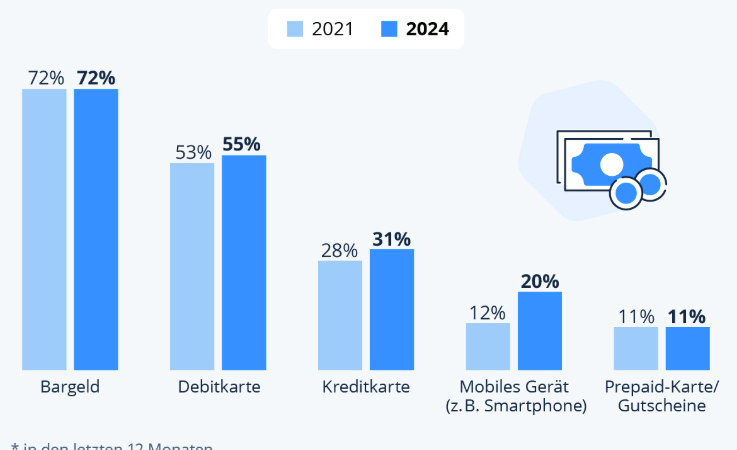
Cash payments will remain possible. However, as of January 1, 2027, customers should be offered at least one digital payment option. This is supported by younger people up to 29 years old, while older individuals view it more critically, as reported by Chip. Tax authorities advocate for this less for consumer convenience and more for the transparency and traceability of payment transactions. The tax authorities are, in fact, convinced that tax revenues would be significantly higher if all customers paid by card.
Businesses in the hospitality industry, in particular, are still cash-intensive.These businesses are also likely to oppose the obligation to offer card payments, as the Hotel and Restaurant Association looks critically at this innovation.
Businesses using open cash registers must operate just as diligently as those with digital solutions. Even if electronic or digital cash registers seem expensive, the effort involved is ultimately less because all transactions are automatically GoBD-compliant processed and documented. This makes cashing up significantly simpler and more secure.
Furthermore, digital POS systems also offer the option of connecting a weighing system.This allows prices to be calculated by weight. Moreover, these systems, with their offline capability, also solve the problem of locations without internet access. As soon as the system is back online, the data is synchronized, which significantly reduces administrative time.
Even though there's no mandatory cash register requirement for sales and market stalls, switching to digital POS systems can significantly simplify operations. Key features here are the offline capability and data synchronization. With FrachtPilot, the connection of a digital POS system, as well as an online shop, via interfaces is possible.
The upper limit would mean that amounts of €10,000 or more cannot be paid in cash. Furthermore, individuals making payments of €3,000 or more must already identify themselves.This identification serves to ensure the traceability of the transaction, which is not inherently possible with cash payments.
Unlike other European countries, Germany currently has no cash limit. In 2024, the EU Parliament and Council agreed to introduce a limit. This regulation will come into force after three years, meaning in 2027.
In countries like Spain, amounts of €2,500 or more must be paid by card, and in France, it's €1,000 or more. In Germany, however, the obligation to identify oneself so far is for payments over €10,000; the recipient must store the data.
By the way:
Digital solutions simplify daily work, even for small businesses with farm shops or sales stands. Cash and open cash registers are still permitted. Also, farm shops will probably not be affected by the cash limits and the planned obligation for cash registers. Nevertheless, digital POS systems significantly simplify daily work. These can also be connected via interfaces to FrachtPilot be integrated. FrachtPilot is THE industry software for regional direct food marketing. If you are still looking for a suitable ERP system, test FrachtPilot for free or get to know us in a free webinar. We look forward to hearing from you!